No products in the cart.

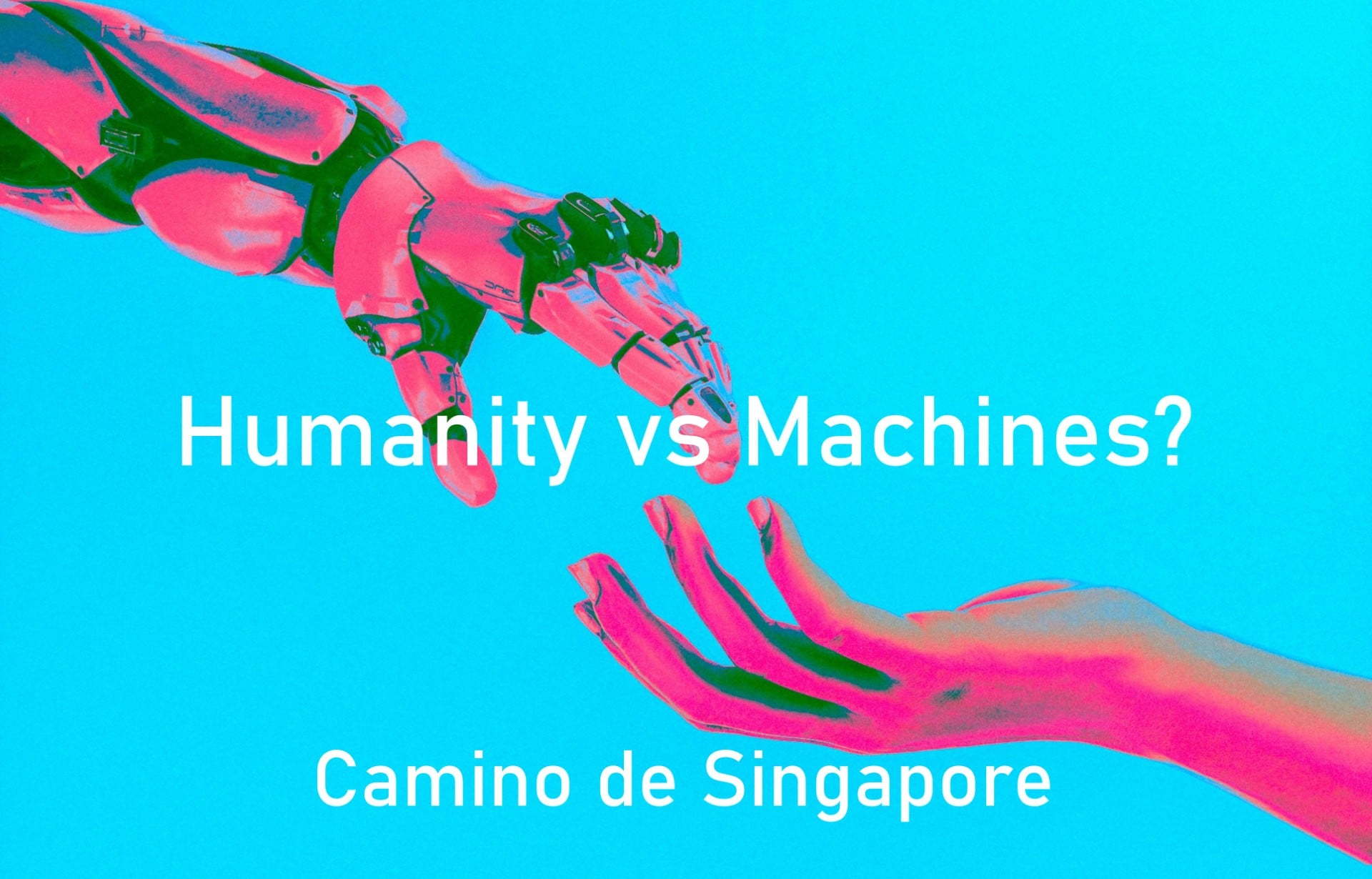
Artificial intelligence is truly the rage these days. Despite political divisions, Parliament unanimously affirms that AI should not lead to joblessness. This is a signal that political leaders know and understand fears over AI’s potential impact on jobs. So is it time to panic?
Much of the anxiety on AI today revolves around the idea of “humans vs machines”. This is especially acute in the public discourse about job displacement. For example, the CEO of AI in Microsoft predicted that most office jobs will be automated (and eliminated) within 18 months. Here, we are seeing technology companies pit humans against machines with the confidence that employers will choose the cost efficiency of machines over human workers, resulting in mass unemployment.
Now, the Catholic Church is never against technological progress that seeks the common good for all. After all, technology is a product of human ingenuity that is only possible due to “God-given human creativity”. The question, rather, is how a particular technology is developed and applied. The current trend of technology companies pitting humans against machines, whether only in words or in deeds, is worrying. Let us turn to the Church’s social teaching tradition to help inform our perspectives.
Firstly, the Church’s social teaching on work says that while a human worker’s output is important, the impact of work on the worker’s development as a person is far more important. In other words, work is primarily for the worker and not the other way around. So it is commendable for the Parliament to affirm that technological advancement should not result in mass unemployment.
Secondly, both Pope Benedict and Pope Francis warned in their social teaching documents, Caritas in veritate and Laudato si’, that technology is not neutral. Technology shapes our lives and societies so profoundly that it is a moral issue. To say that there is nothing we can do about the impact of technology on human lives, since that is just how progress works, serves the interests of the powerful few who control these technologies. After all, many of them do not want to be constrained in their quest for ever greater profit and power.
But if we heed the Church’s warning that technology is a moral issue, the whole picture changes. Technological progress is not a natural phenomenon over which we have no control. Rather, it is a human decision subject to moral principles. We can decide how AI should be used through frameworks, regulations and the law. We are not hopeless and powerless in shaping the trajectory of history. Humans, as it has always been, are the masters of technology.
In view of this, perhaps one way to cut through the noise of all these apocalyptic predictions of what AI will do, so that we can take the appropriate action, is to realise that the true story is not “humans vs machines”. Rather, since humans as the inventors and masters of technology, we need to ask instead which humans are in control. When the story changes to humans in control of AI against the rest of us, we can obtain a greater clarity. Instead of being paralysed by fear about what AI can do or reject this technology entirely, we can instead look towards how we can hold accountable those who control the technology so as to ensure that AI serves the common good, especially the most vulnerable.
So the next time someone expresses despair on how AI will take away jobs, we can remind them that we are not helpless. If we see an AI tool causing harm to others, we can find out who controls it and advocate for alternative products or a different way of using them. After all, AI is made by humans and not a force of nature. We can decide how it should be used.
Related News
Erwin Susanto works for Caritas Singapore. He enjoys arcane conversations on the Old Testament/Hebrew Bible in the context of the Ancient Near East. He enjoys thinking about all sorts of contemporary issues and often wonders if punditry is fun.